
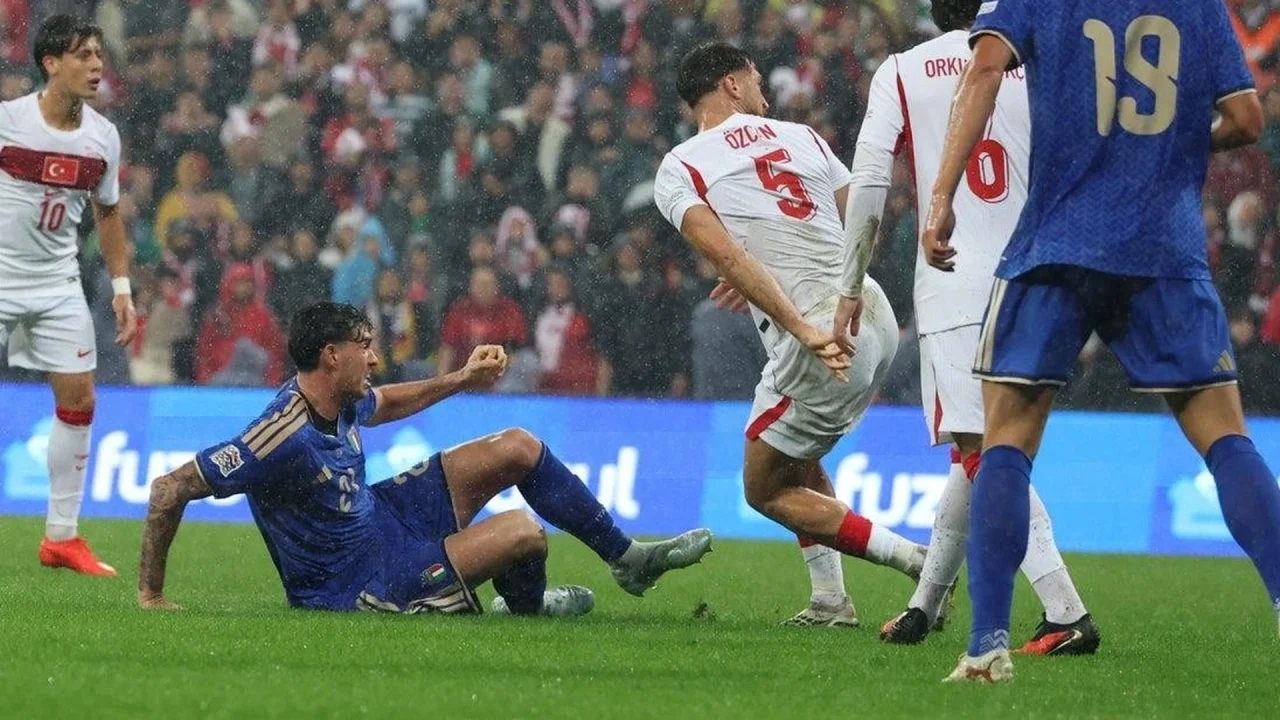
Italy won 4-1 away in Türkiye, thanks to calm possession and sharper timing in the penalty area. Bastoni gave them the lead, Frattesi doubled it, and Kayode scored in his senior international debut. Barış Alper Yılmaz pulled one back for the hosts before Pio Esposito headed in the final goal. Once they had control, Italy kept looking forward rather than simply sitting on their lead.
Bastoni’s opener came out of Italy’s patience
Italy refused to rush their first forward pass under Türkiye’s pressure. The defenders moved the ball around until a midfielder could take it on the half-turn, and then the whole group stepped up together. Bastoni’s goal showed that a centre-back can be useful in attack after helping to start the move. For the visitors, the opener proved that controlled build-up could produce a real chance in the box.
Türkiye wanted a fast, emotional game, especially when the ball reached the wings. Italy’s response was selective: they took their time in the risky moments and sped up once the first line of pressure was bypassed. That avoided careless turnovers near their own box while keeping enough players close to the area to win a second ball.
Frattesi’s runs found the gap behind the first challenge
Frattesi is hard to mark because he doesn’t sit between the lines waiting for the ball throughout the move. He comes from midfield once defenders have locked onto the striker and the wide player. His goal came from exactly that timing. The run targeted an area that looked covered at the start of the sequence but opened up as Türkiye shifted toward the ball.
Movement like this changes what an ordinary cross or cutback is worth. The first attacker doesn’t have to beat every defender if a midfielder arrives at the edge of the box at the right pace. Türkiye’s central players often had to decide between tracking Frattesi and guarding the edge of the area. Italy kept exploiting that hesitation to keep attacks alive after the first action.
Türkiye’s response tested Italy’s nerve
Barış Alper Yılmaz gave the home side a way back into the game and raised the noise inside the stadium. The real question was whether Italy would give up what had earned them the lead. Sitting too deep would have invited crosses and loose balls; chasing an instant reply without shape would have handed Türkiye counter-attacks.
Italy kept using the ball to tire the hosts instead of killing time. When pressure got heavy, the visitors played the safer pass, then looked forward again as soon as their shape was back. That stopped Türkiye from building the long spell of attacks they needed to turn one goal into a real shift in momentum.
| Goal sequence | Player |
|---|---|
| Italy’s first | Alessandro Bastoni |
| Italy’s second | Davide Frattesi |
| Türkiye’s goal | Barış Alper Yılmaz |
| Italy debutant scorer | Michael Kayode |
| Last goal | Pio Esposito |
Kayode’s debut goal widened the attack at the right time
A full-back can slip into the picture unnoticed when the defence tightens around the central runners. Kayode did exactly that on his senior debut. His positioning gave Italy an extra man on the far side and forced Türkiye to cover the entire width of the box. The goal mattered personally, but tactically it came from the whole move drawing defenders away from him.
The display also showed why a debutant needs a clear job. Kayode wasn’t expected to fix the game through constant improvisation. He knew when to support, when to hold the touchline and when to go into the area. Having a defined responsibility reduced the pressure of the occasion and let his athleticism help a team that was working as a unit.
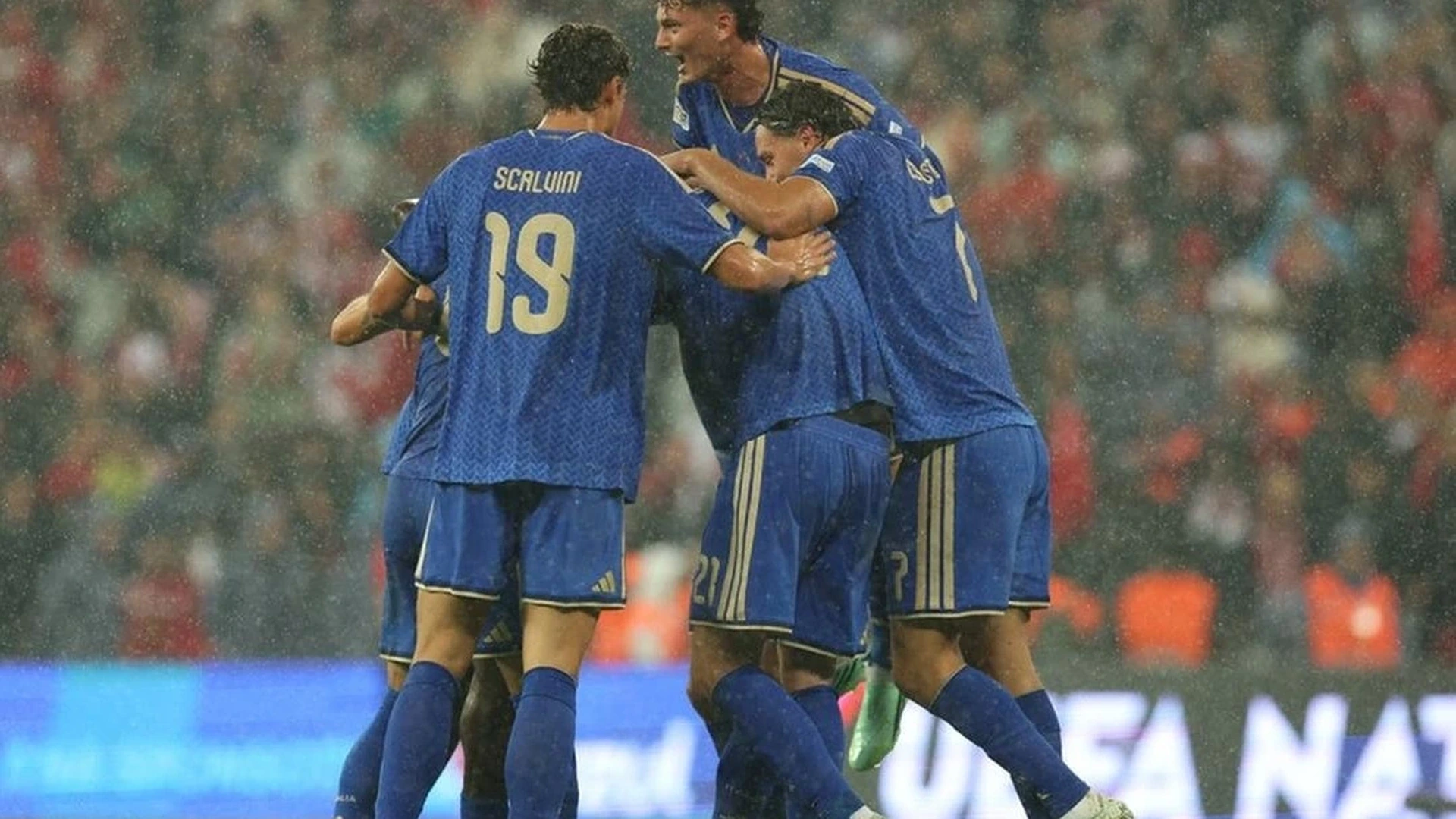
Pio Esposito’s header sealed Italy’s grip on the box
The fourth goal came from a striker who attacked the delivery with real conviction. Esposito’s header showed the value of having a target man who can turn wide service into a direct shot. Earlier runs had already forced Türkiye to defend cutbacks and midfield arrivals, and the striker punished the gap between and above the centre-backs.
A 4-1 scoreline might make every Italian attack look simple, but the margin came from varied movement. Bastoni contributed, Frattesi came in from midfield, Kayode gave width and Esposito finished as the central striker. Türkiye couldn’t rely on one marking plan against four different sources of danger, particularly as the game wore on.
Italy’s win came from repeating principles, not patterns
The visitors relied on the same broad ideas throughout: keep the first pass secure, move forward with support and fill several lanes in the penalty area. The final touch changed each time. That’s a more productive kind of consistency than repeating the same cross until it finally works. The players understood the spacing but still had the freedom to spot the next opening.
Türkiye can look at the moments before each goal rather than treating the scoreline as one defensive collapse. Pressure on the ball, tracking from midfield and cover at the far post broke down at different points. Fixing those links will matter more than adding another defender. Italy leave with a strong away win and proof that players from several generations can contribute within one system.



Comments
No comments yet — be the first to share your thoughts.