
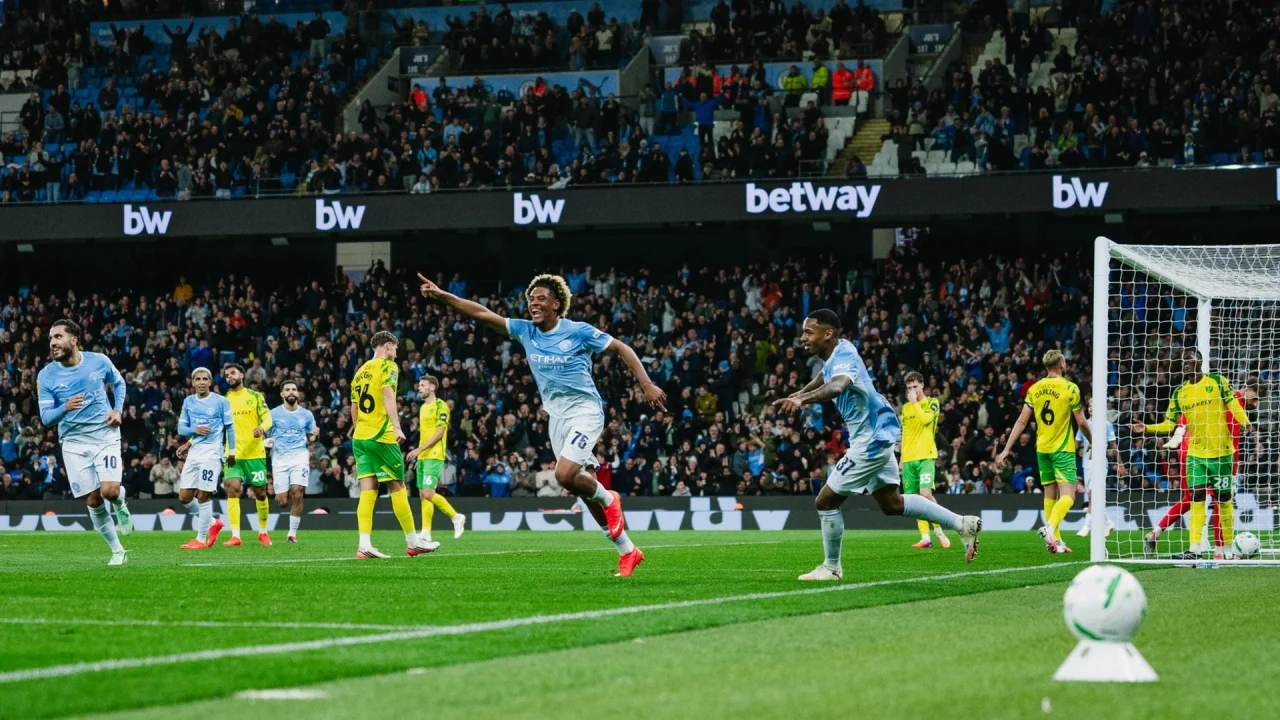
City beat Norwich 5-0 in the Carabao Cup at the Etihad Stadium, and with the tie over they advance without any lingering doubt about their place. The scoreline is only part of the story. City had to fit together a reshuffled side, keep pushing after taking the lead, and stop Norwich from building counterattacks out of the scraps they won back. The five goals came because control held beyond the early phase, not because attacks were rushed.
Fresh faces needed a shared structure
Cup ties give managers the chance to reshuffle, but unfamiliar pairings can leave holes between the press and the passing lanes. City needed every player to know where to stand around the ball so that one teammate’s run did not leave the next pass without support.
A rotated team works best when the roles stay recognisable even though the faces have changed. That familiarity lets younger or less-used players show their quality without carrying the whole match on their own. When possession went astray, City also had experienced players through the middle to organise the press and shield less experienced colleagues from open space. That backbone turned the changes into a unit rather than a series of trials.
Going ahead forced Norwich to choose
Once City led, Norwich faced a decision: push up and press, or sit deeper and guard the middle. Whichever route they took opened a different kind of opportunity for the side in possession.
City kept the ball moving until a defender stepped out of line, then attacked the space that move left behind. Patience was the key, since forcing an early direct pass would have handed Norwich the quick break they wanted. Having fallen behind, Norwich could no longer rely on the same counterattacking chances, and City read that shift well, refusing to thread a risky ball into the first gap on offer. By drawing the defence across before accelerating, the home side created attacks that were far easier to keep alive after an initial clearance.
Width pulled Norwich apart
City’s attacks became more threatening once they filled both flanks and stopped Norwich from concentrating on the centre alone. Wide positions open room for an underlap, a cut-back or a switch to the far side.
Still, the ball has to reach the receiver while they face forward, with enough runners near the box. Width without timing simply becomes sterile possession, whereas coordinated movement forces the defence into a decision it cannot cover twice. The most effective wide moves finished with a pass to a teammate rather than a speculative ball into a crowd. Runners came in at varying depths, so the receiver had a choice between the near post, the edge of the area and a switch. That range stopped Norwich from defending one repeated pattern.
A big lead did not switch off the defensive side
A commanding advantage can tempt full-backs and midfielders to pile forward into the same zone at once. City kept cover behind the ball and cut down Norwich’s safe routes out of their own half.
That protection behind the attack is why pressure can be renewed after a clearance. It also reduces the need for desperate recovery runs that would expose a reshaped back line to its toughest duels. Defensive control started with where the nearest midfielder stood while the attack was still unfolding. If a cross was blocked, City already had a player ready to challenge the next pass. The shape kept Norwich far from goal and let the next attack begin without a long chase back.
Substitutes earned meaningful minutes
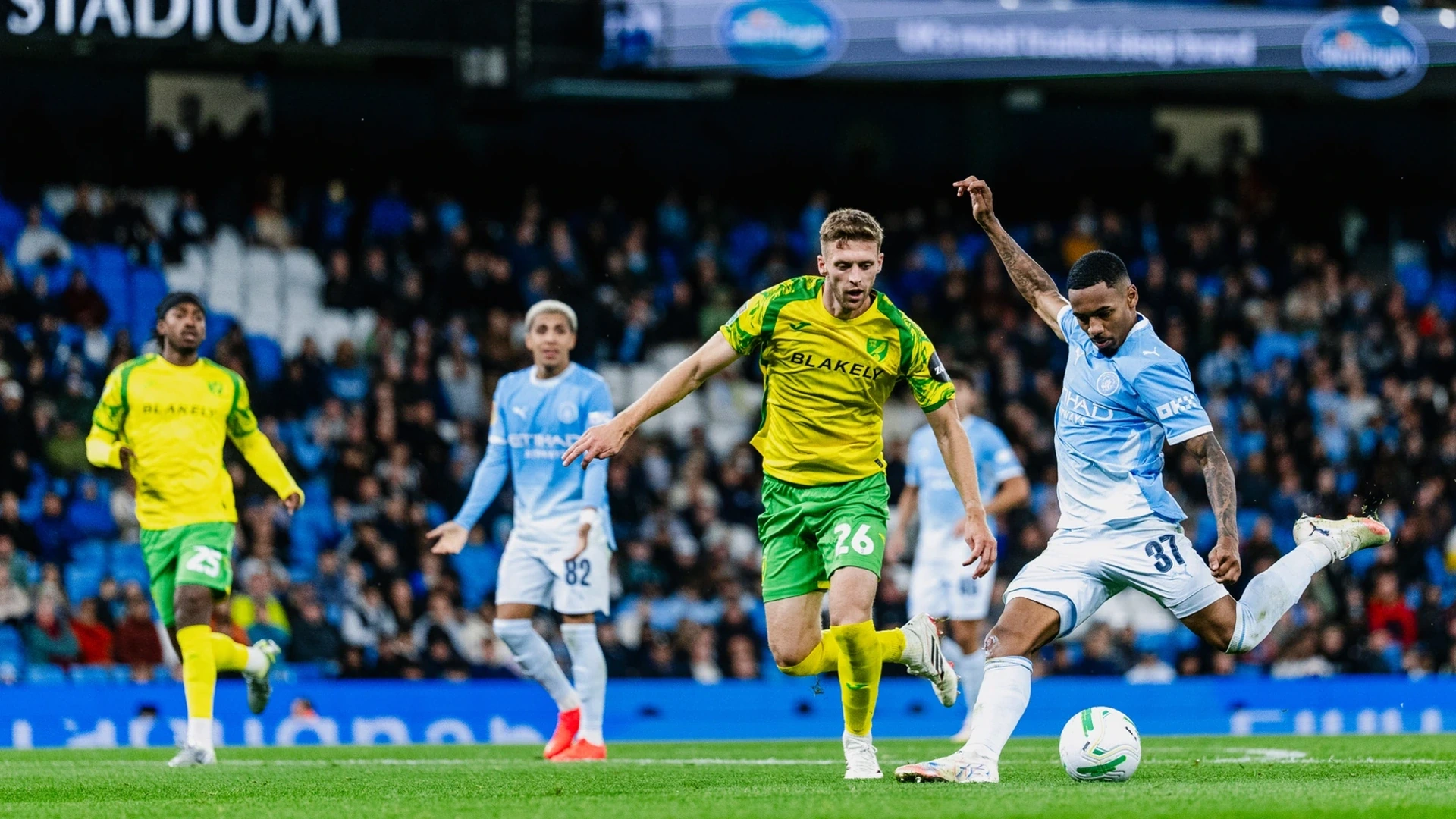
The comfortable scoreline let City manage workloads and hand extra time to players in a proper competitive fixture. Those minutes count when they involve genuine pressing, defensive set-piece duties and decisions in and around the penalty area.
They lose value if the opponent is written off before the final whistle. Keeping standards high through the changes gives the coaching staff firmer evidence for future selections. The score gave substitutes their time, but the real benefit lay in how they used it: following pressing triggers, defending restarts and staying composed near the penalty area. Competitive habits only prove themselves when they hold up in a match that is already won.
The next round will test the same things
A 5-0 win confirms progress but does not promise that this line-up or approach will work against the next opponent. What carries over is spacing, patience and protection against transitions.
Finishing varies from game to game, while those structural habits create more chances over time. City can enjoy the margin without letting it obscure the decisions that produced it. The next side may sit deeper, press harder or punish a loose pass more sharply. City cannot take five goals into that tie, but they can take the spacing and the work done after losing the ball. Those repeatable details are the most convincing takeaway from this win.


Comments
No comments yet — be the first to share your thoughts.