
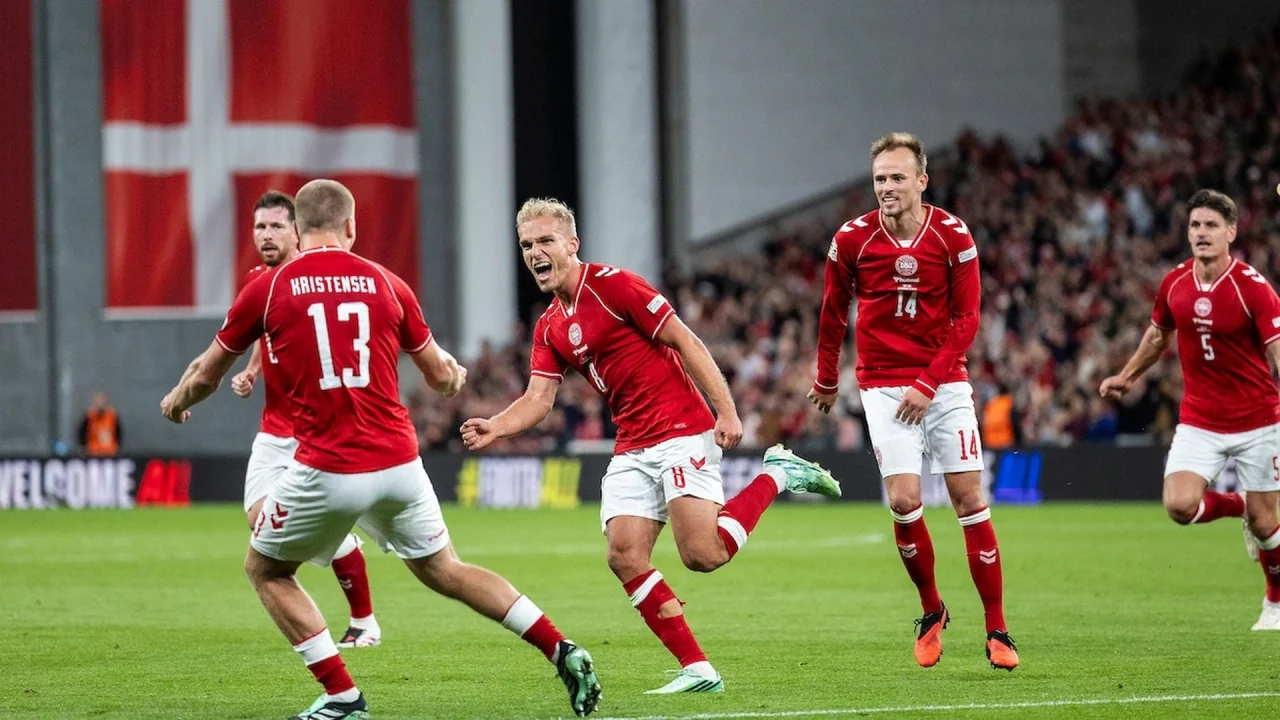
Denmark won 2-0 against Wales, with Mikkel Damsgaard orchestrating the key moments down the left. An early delivery from him early in the second half ended up in the Welsh net, and a later ball set up Gustav Isaksen, whose shot rebounded off the crossbar and in. Before the interval, Denmark had enjoyed roughly 70 percent of the first-half possession, and Damsgaard had hit the post.
Denmark’s possession dragged Wales out of shape
The home side dominated the ball in the first half, yet the point was not the possession total alone. They moved the ball patiently until the Welsh midfield tightened, then switched play toward Damsgaard and the wide channel. Doing this again and again left the visiting wing-back choosing between pushing up and guarding the space behind him.
Wales kept the score level at half-time because their front line did not hunt every Danish centre-back. That restraint limited the gaps between the lines. Denmark therefore needed width and a player prepared to cross before the penalty area filled up. Damsgaard provided both, and his effort against the post was the first real warning sign before the goals came.
Damsgaard’s ball led to the first own goal
Soon after the restart, Damsgaard whipped another dangerous ball into the box. Ben Davies tried to clear it and steered it into his own net. The defender made the final contact, but the chance was born from Denmark getting wide with several players attacking different heights inside the area.
A defender with his back to his own goal has little margin for a clean clearance. Denmark added to the pressure by sending a runner to the near post and keeping another option further back. Davies could not afford to leave the ball alone. The move shows how an accurate cross can produce a goal even when no attacker touches it last.
Wales pushed numbers forward after falling behind
The opening goal reshaped the visitors’ approach. A tight, defensive shape was no longer sufficient, so Wales needed a midfielder or wing-back to push higher while in possession. That gave them a route forward but also left more room for Denmark to exploit once they won the ball back. The hosts could now decide whether to slow the game down or accelerate into the open side.
Denmark did not drop their shape in pursuit of a quick second. The centre-backs stayed involved in building play, and midfielders remained close enough to support the attack. As a result, a single Welsh clearance never turned into an unopposed run at the Danish goal. Keeping control after scoring mattered just as much as the pressure that produced the opener.
| Measure | Denmark |
|---|---|
| Result | 2-0 |
| First-half possession | About 70% |
| Creator | Mikkel Damsgaard |
| Second scorer | Gustav Isaksen |
Isaksen finished Damsgaard’s second decisive cross
Damsgaard later found Isaksen, and the winger’s finish struck the crossbar before going in. He ran into space that the earlier movement had opened up. Rather than marking the nearest defender, he arrived just as the ball was delivered. That timing gave the shot more purpose and left the goalkeeper with less time to react.
Hitting the crossbar was not a symptom of loose control. Isaksen struck the ball with enough height and power to beat the keeper from the angle he had. Denmark’s second goal also meant Wales could no longer rely on a single set piece to get back into the game. The hosts had turned their territorial dominance into a secure lead.
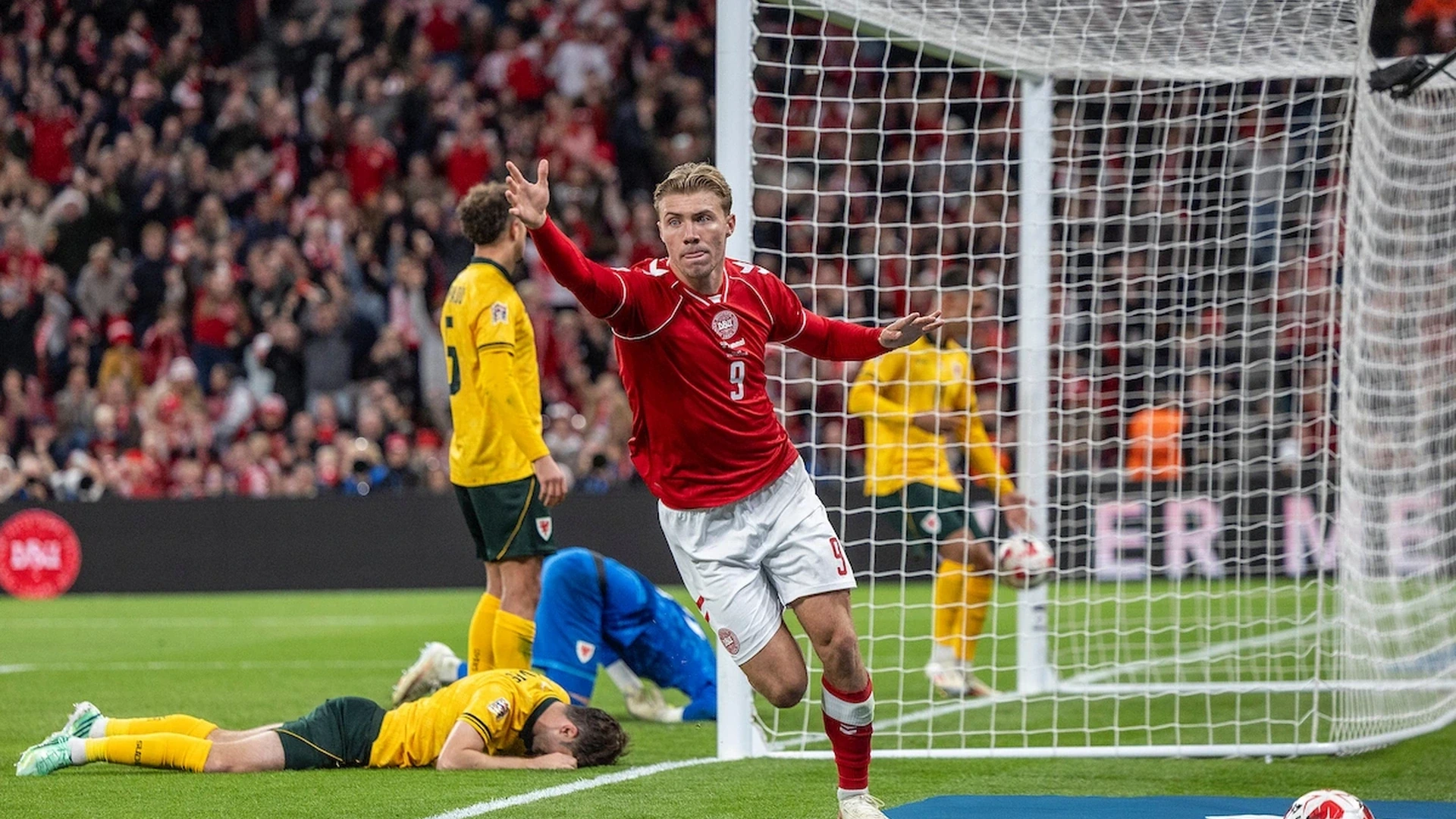
Both Denmark goals came from the left, but through different routes
Damsgaard was involved in both goals, yet Denmark never simply repeated the same delivery. The first ball forced a defender to clear while facing his own goal. The second reached Isaksen at exactly the right moment. Denmark worked down the same flank each time but altered the target, speed and trajectory of the final pass.
Wales can take encouragement from a disciplined first half, though their review needs to focus on the build-up to each cross. Stopping a delivery at the last second is hard. The winger, the nearest midfielder and the covering defender have to shut the route down together. Denmark’s 2-0 victory rested on exposing that lack of coordination twice while keeping the rest of the game under control.
Denmark kept things simple by offering easy next passes
Damsgaard’s influence came from receiving the ball in spots that gave him more than one option next. Wales could not press him from one direction without leaving another Danish player free, and Denmark seldom kept possession long enough for the gap to shut. The approach works repeatedly because the receiver reads the next action early, while teammates hold useful distances rather than crowding the ball.
Wales need a better way to play beyond Denmark’s first wave of pressure. A clearance may halt one attack, but it hands Denmark another chance to regroup. The answer is not reckless short passing in every situation. One forward can occupy a central defender while a midfielder moves toward the second ball, giving the goalkeeper or centre-back a clear long-ball target. Even a small gain there would cut down the time spent defending.

Comments
No comments yet — be the first to share your thoughts.