
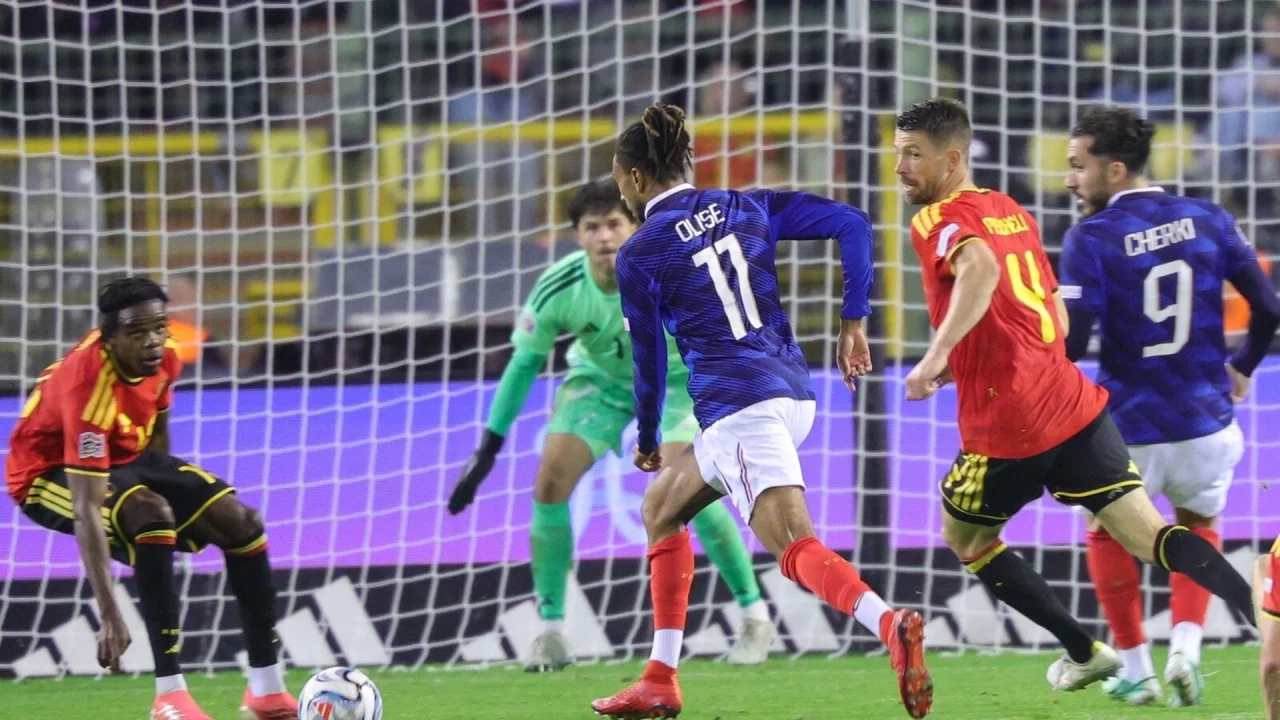
France beat Belgium 1-0 in the Nations League thanks to Michael Olise’s strike in the 88th minute. The game stayed goalless until his late breakthrough, which followed a driving run and a cool finish. Désiré Doué hit the crossbar for France, Lucas Da Cunha rattled the post, and Dodi Lukebakio came close for Belgium. The scoreline understates how hard both sides pushed for a goal.
Belgium’s tight shape kept the middle congested
Belgium guarded the space in front of their centre-backs and pushed France to attack from the flanks. That limited the simple passes into a striker who could turn and shoot. France moved the ball forward with ease, but the next touch was usually under pressure or came with the receiver facing his own goal. The home side accepted harmless wide areas as long as the box stayed compact.
The set-up also offered a route out of defence. When Belgium won the ball, France’s full-backs had already advanced, leaving room behind them for an early pass. Lukebakio’s pace meant the visitors had to think about defending the transition rather than sending every midfielder into the final third. That tension kept the game level well into the second half.
France found better openings when they quickened the pace
Patient possession alone did not shift Belgium enough. France’s most threatening moments came when they sped up after winning the ball back or switched play with an early pass. Doué’s strike off the woodwork showed the benefit of getting a shot away before the defensive line could reset. One more touch would have given a Belgian defender time to cut off the angle.
France never had to give up control or sprint through every attack. The trick was mixing it up. Moving the ball from side to side drew Belgium across, then a sudden switch or a forward carry exposed a defender still shifting his weight. Against a compact team, the tempo should rise when a gap opens, not stay high for its own sake.
Belgium’s moments kept the contest alive
Da Cunha’s effort against the post and Lukebakio’s chances showed Belgium were not simply sitting back for a draw. They found occasions when France’s back line was stretched and enough runners arrived to make those breaks dangerous. Their problem was turning promising entries into sustained pressure. When an attack broke down, France usually won the ball back and drove Belgium toward their own penalty area.
An extra supporting runner might have changed that. The lead Belgian attacker often received with only one teammate ahead, so France could guard the box and make the shot awkward. Keeping another midfielder close to the edge of the area would have provided a cutback or rebound option, though it would have left more risk behind the ball.
| Key info | Specifics |
|---|---|
| Final score | Belgium 0-1 France |
| Decisive goal | Michael Olise, 88th minute |
| Woodwork strike for France | Désiré Doué |
| Woodwork strike for Belgium | Lucas Da Cunha |
Olise settled it by running at the defence himself
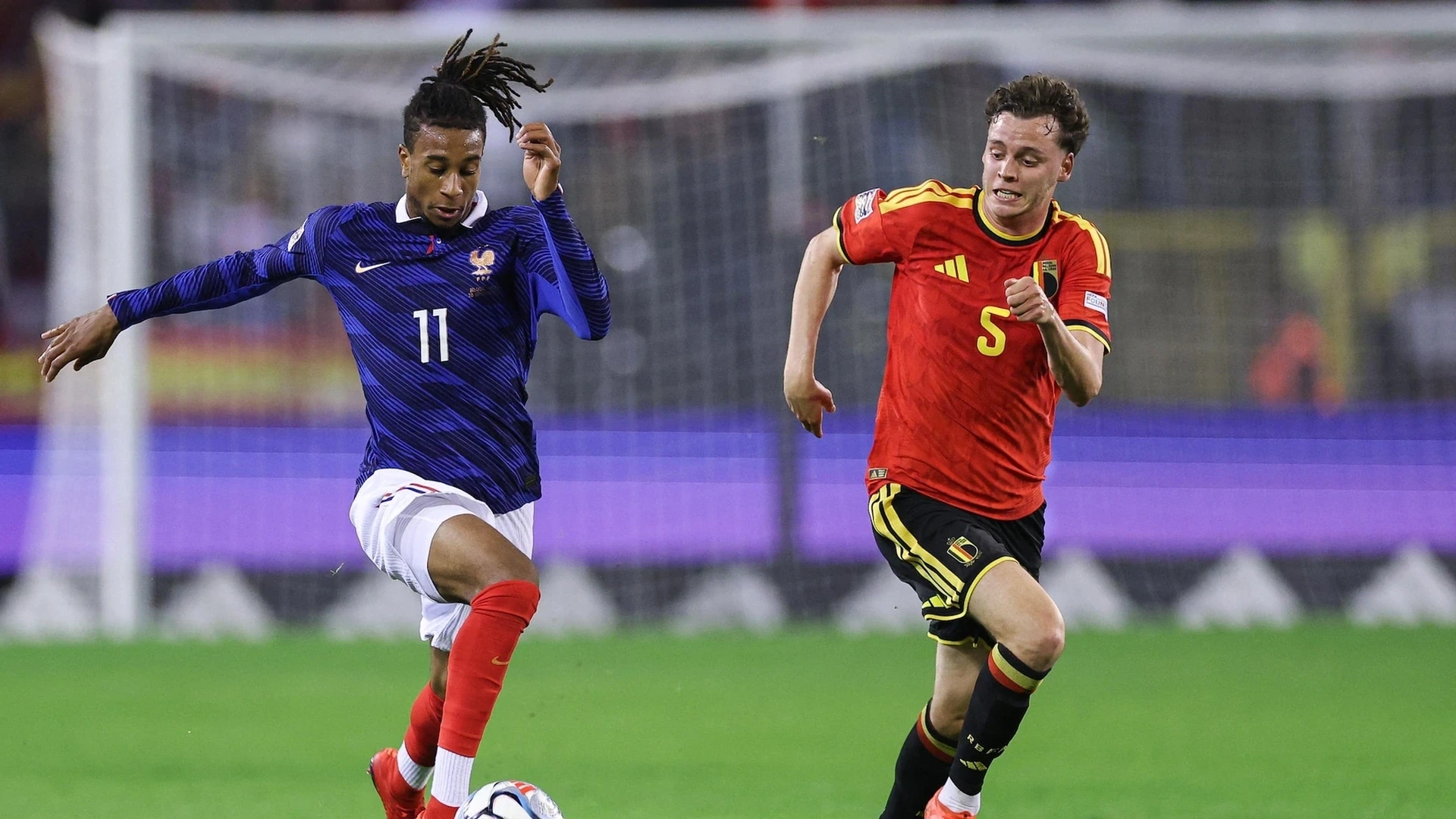
The decisive move did not rely on a lengthy passing sequence. Olise picked up the ball with enough room to face goal, attacked the defensive line and finished before Belgium could recover their shape. The run pulled defenders backwards at the moment they needed to hold their positions. One stepped out toward the ball, another covered the central pass, and a shooting angle opened between those two decisions.
The finish looked calm because the build-up had created the chance. Olise did not fire at the first glimpse of goal, nor did he keep dribbling until the angle closed. He moved on until the keeper and the nearest defender could no longer cover every option. In a tight match, that personal decision supplied the one thing the shape of both teams had not eliminated.
France managed the lead calmly after scoring
A late goal can be thrown away if the scoring side treats the restart as a cue to attack again. France had to handle Belgium’s urgency, defend crosses and avoid giving away cheap set pieces. The closing minutes were their own phase: possession helped when it moved the ball away from danger, and clearances needed enough height and distance to let the team push up together.
Belgium had little time left for a slow build, so their football grew more direct. France’s centre-backs could prepare for that because the situation made it predictable. Protecting the first contact and covering the second ball kept Olise’s strike decisive instead of letting it become the start of a messy scramble.
Both sides take away a lesson about efficiency
France can feel encouraged that they found a solution without losing defensive shape. They hit the frame earlier, kept disrupting Belgium’s block and eventually got the individual action their play had been building toward. The next task is to produce that decisive one-on-one sooner and depend less on a finish in the 88th minute.
Belgium were competitive enough to create chances but not clinical enough to take anything from the game. Their compact defence and transition plan held up for most of the evening, and better support around the first counter pass would make it more productive. The 1-0 scoreline came down to one finish, yet the work behind it explains why France took all three points.
Comments
No comments yet — be the first to share your thoughts.